

Wisdom teeth tend to arrive quietly at first. They develop in the late teens or early twenties, often without much attention, until something feels slightly off. A dull ache in the back of the jaw. Tender gums that seem irritated for no clear reason. Food catching in places that were easy to clean before.
Not every wisdom tooth needs to be removed. However, not every wisdom tooth erupts in a way that supports long-term oral health either. The key is understanding the difference.
At Brighter Day Dental in Katy, TX, Dr. Edward Kim evaluates wisdom teeth carefully before recommending removal. The decision is based on positioning, space, symptoms, and overall oral health — not simply age.
What Exactly Are Wisdom Teeth?
Wisdom teeth are the third set of molars located at the very back of the mouth. For some people, they erupt fully and align properly. In those cases, they may function like any other molar.
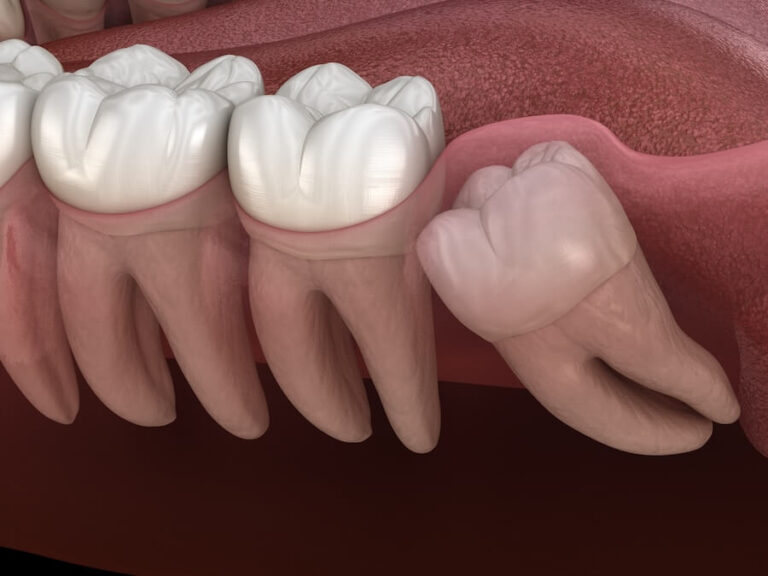
More often, however, there is limited space in the jaw. Modern jaws are typically smaller than those of previous generations, which means these final molars may not have adequate room to erupt properly. When space is restricted, wisdom teeth may become impacted, partially erupted, or angled in a way that affects surrounding teeth.
The way they develop determines whether they can remain comfortably — or whether they become a source of concern.
Signs You May Need Your Wisdom Teeth Removed
There are several indicators that wisdom teeth may require removal. Some symptoms are obvious. Others are more subtle.
Common signs include:
- Persistent pain or pressure in the back of the jaw
- Swollen or tender gum tissue around the area
- Recurrent infection near partially erupted teeth
- Difficulty opening the mouth fully
- Headaches or jaw discomfort
- Food trapping that is difficult to clean
Sometimes patients assume the discomfort will resolve on its own. Occasionally it does, but often the issue returns because the underlying positioning has not changed.
In other cases, wisdom teeth cause no immediate pain but begin to affect neighboring molars. When they push forward at an angle, they can trap bacteria between teeth, increasing the risk of decay or gum inflammation.
Regular dental exams and imaging allow us to monitor these changes before they become more complicated.
Impacted Wisdom Teeth: What Does That Mean?
An impacted wisdom tooth is one that does not fully erupt through the gum line. It may be partially covered by gum tissue or remain entirely beneath the surface.
Impaction can lead to several issues. Partially erupted teeth create small pockets where bacteria accumulate, often leading to localized infections. Fully impacted teeth may place pressure on adjacent molars or contribute to cyst formation in rare cases.
X-rays are essential in identifying impaction. Even if a wisdom tooth is not currently painful, its position beneath the surface can indicate whether future problems are likely.
Dr. Kim reviews these findings carefully with patients at Brighter Day Dental in Katy, TX, explaining not just what is visible, but what it may mean over time.
When Monitoring Is Appropriate
It is important to note that removal is not automatic. If wisdom teeth are fully erupted, aligned properly, and easy to clean, they may simply be monitored.
In these situations, regular exams and periodic imaging ensure that any changes are detected early. Preventive monitoring can be a reasonable approach when no symptoms or structural concerns are present.
The goal is not to remove teeth unnecessarily. It is to prevent complications before they escalate.
The Benefits of Timely Removal
When removal is recommended, timing can influence recovery. Younger patients often experience smoother healing because the roots may not be fully developed and the surrounding bone tends to be more flexible.
Delaying removal in the presence of symptoms can lead to repeated infections, damage to adjacent teeth, or increased discomfort. Addressing the issue proactively often prevents a more urgent situation later.
Wisdom tooth removal is a common procedure, and when planned appropriately, it can reduce the risk of future complications.
What to Expect During a Wisdom Teeth Evaluation in Katy, TX
At Brighter Day Dental in Katy, TX, a wisdom teeth evaluation includes a comprehensive exam and digital imaging. Dr. Edward Kim assesses positioning, available space, gum health, and overall alignment.
Patients are guided through the findings in clear terms. If removal is recommended, the reasoning is explained thoroughly, including potential risks of delaying treatment. If monitoring is appropriate, that plan is outlined as well.
Understanding the “why” behind the recommendation helps patients feel more confident in their decision.
Wisdom Teeth Removal at Brighter Day Dental in Katy, TX
Knowing whether you need your wisdom teeth removed requires careful evaluation rather than assumption. At Brighter Day Dental in Katy, TX, Dr. Edward Kim provides thoughtful assessments to determine whether removal, monitoring, or no action at all is the best course.
If you are experiencing discomfort in the back of your jaw or have questions about your wisdom teeth, contact Brighter Day Dental in Katy, TX to schedule an appointment. A comprehensive evaluation can help clarify your options and support your long-term oral health.